I. Overview
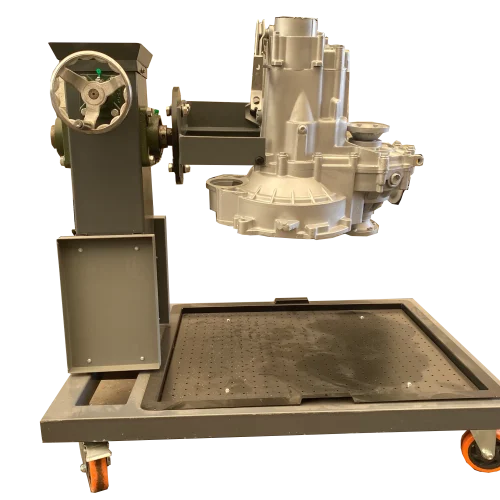
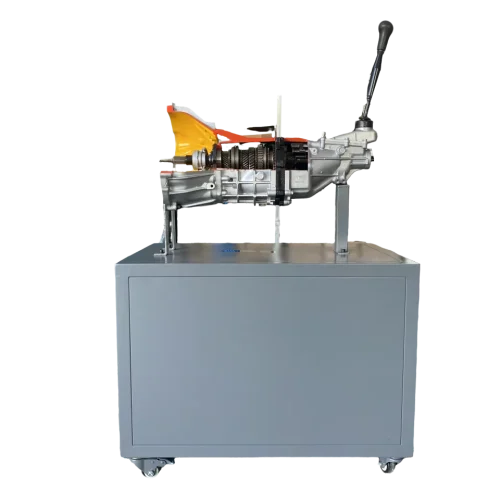
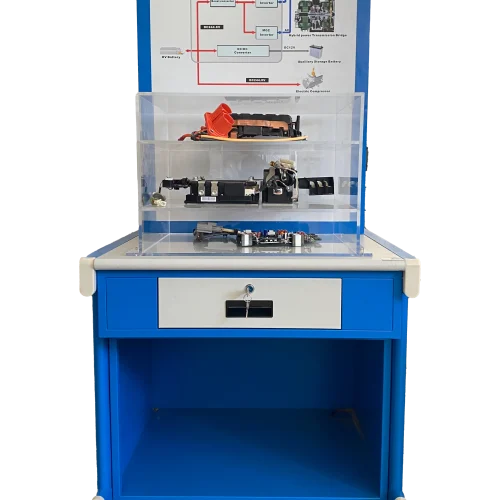
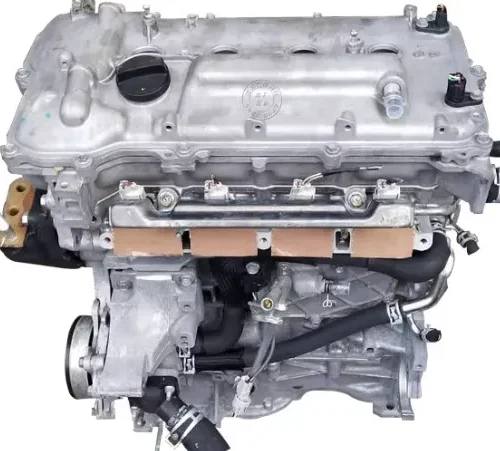
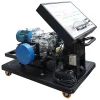
1. The display stand is based on a CVT and consists of a dissected torque converter and transmission assembly. It is suitable for practical training on the structure and maintenance of automatic transmissions in secondary and higher vocational colleges and training institutions, meeting the needs of visually demonstrating the structure and operating principles of CVTs.
II. Equipment Components
1. The training stand includes the following main components: ① 1 dissected transmission assembly; ③ 1 mobile stand.
III. Functional Description
1. The CVT and its internal components are cut into various sections to fully demonstrate the internal structure of the torque converter. 1. This provides a standard reference for learning how to disassemble, repair, diagnose, and troubleshoot continuously variable transmissions.
2. From the dissecting surface, the CVT’s internal mechanical components, such as the transmission, drivetrain, clutch, brake, and the hydraulic control system’s oil pump, piping, and valves, can be clearly observed.
3. The principle is clearly illustrated by connecting hydraulic lines to show the direction of hydraulic transmission. The torque converter can be dissected along the weld seam, revealing all internal components.
4. Through advanced machine dissection, each dissected surface and each component are color-coded, allowing students to clearly understand the mechanism. Clearly observe the working conditions of internal components.
5. The entire test stand is constructed of European-standard aluminum profiles and equipped with universal casters for flexible mobility and caster locking devices, ensuring easy, safe, and reliable operation.
IV. Technical Features
1. Test Stand Dimensions: ≥ 800 mm (L) × 600 mm (W) × 800 mm (H)
2. Frame Material: European-standard industrial silver aluminum profile/matte oxidized finish
3. Load-bearing Wheels: Made of a single-piece composite nylon material, they offer high load-bearing capacity and excellent wear resistance. The wide wheel tread provides exceptional stability, flexible rotation, and superior durability. The dual-bearing design ensures even load distribution and is pressure- and impact-resistant.
V. Practical Training Projects
1. Understanding the Structure of a CVT System;
2. Analysis of CVT Component Locations;
3. Experimental Analysis of the Gear Transmission Routing in a CVT System;
4. Comprehensive Diagnosis of a CVT System.