I. Overview
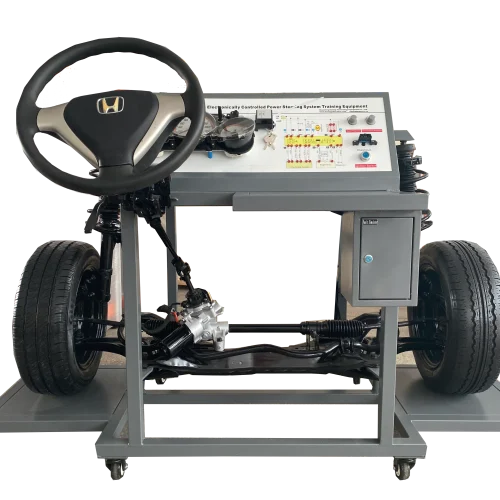
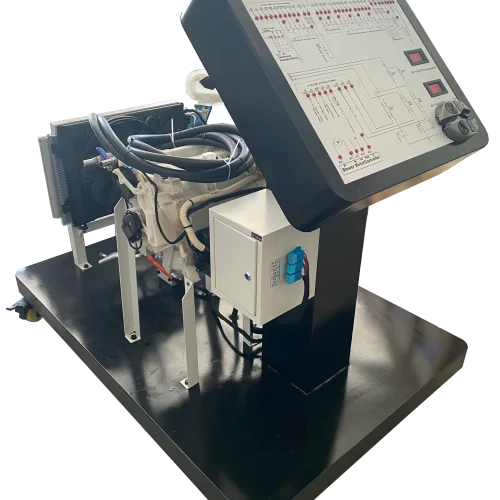
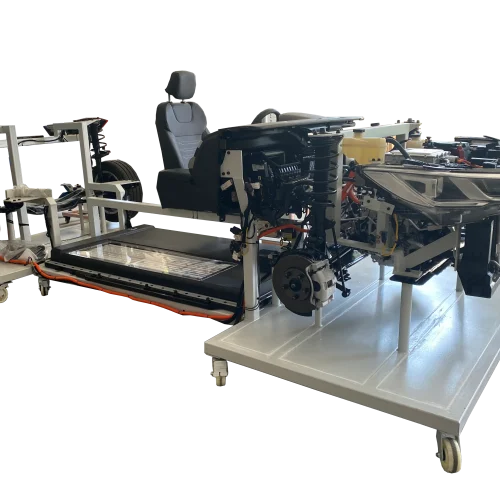
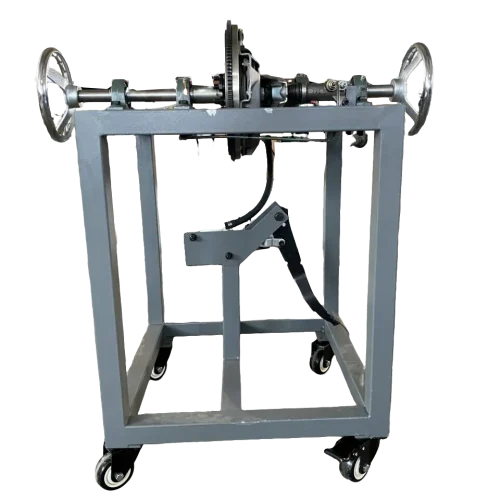
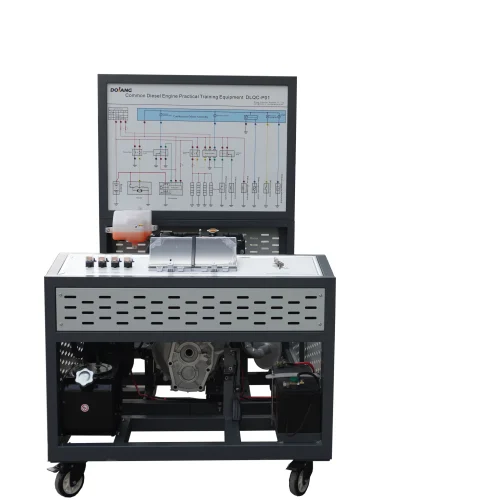
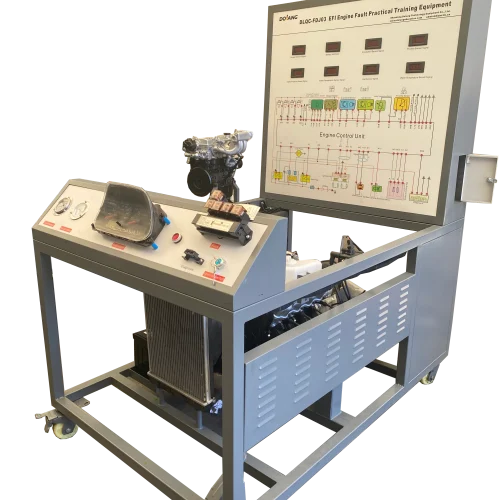
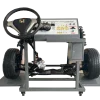
1. The training platform is primarily composed of the original vehicle’s conventional electronically controlled hydraulic power steering assembly and operating accessories. The steering system can be started and operated, simulating vehicle acceleration and deceleration, demonstrating the steering system’s actual operation based on vehicle speed, and providing practical operation of operating conditions such as fault detection and diagnosis, fault simulation, and troubleshooting. This platform realistically demonstrates the structure, principles, and operating process of an automotive electronically controlled hydraulic power steering system. It is suitable for practical training in automotive steering system theory and maintenance at various institutions and training organizations.
II. Equipment Components
1. The training platform includes the following key components: ① Instrument assembly (1); ② Battery (1); ③ Steering wheel assembly (1 set); ④ Wheels (2 sets); ⑤ Steering control computer (1); ⑥ Torque sensor (1); ⑦ Steering gear (1); ⑧ Brake disc assemblies (2 sets); ⑨ Subframe (1 set). III. Functional Description
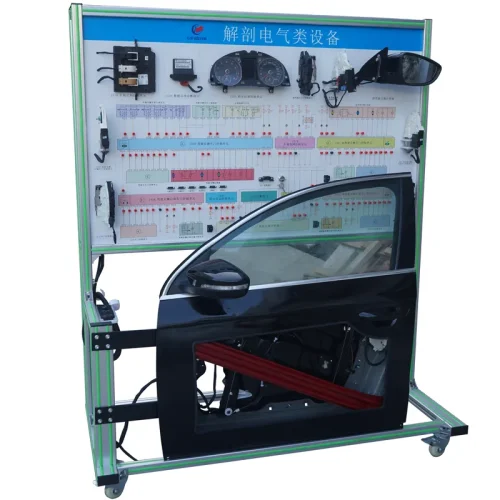
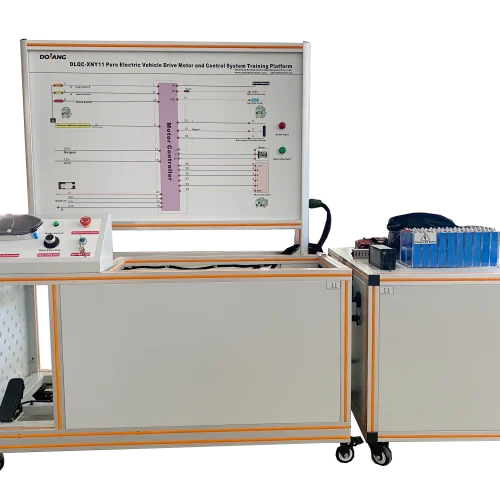
1. Equipped with an electric-hydraulic power steering system, engine control unit, instrument cluster control unit, power steering motor control unit, self-diagnostic control unit, angular velocity sensor, and speed sensor, all mounted on a movable test bench.
2. The training bench panel is equipped with multi-function test terminals, allowing direct on-screen detection of electrical signals from the terminal pins of various sensors, actuators, and control units (ECUs), including resistance, voltage, current, frequency, waveform, and other parameters.
3. Equipped with a diagnostic socket for original vehicle fault detection communication, allowing system diagnostics to read fault codes and data streams using a computer diagnostic instrument.
4. The wiring harness terminals are neatly arranged and concealed, and the wiring harness is securely secured on the back of the panel and inside the test bench.
5. Comparison of operating conditions with and without power steering.
6. Equipped with an automotive electronically controlled hydraulic power steering system.
IV. Technology Features
1. Stand Dimensions: ≥ 1400 mm (L) × 700 mm (W) × 1300 mm (H)
2. Frame Material: Sheet metal with electrostatic spraying
3. Main Panel Material: Aluminum-plastic composite panel (weather-resistant, wear-resistant, high-temperature resistant, high-strength, and corrosion-resistant)
4. System Circuit Diagram Printing Method: UV Printing (The system circuit diagram is drawn and assembled in accordance with the original manufacturer’s repair manual)
5. Side Panel Material: Aluminum-plastic composite panel (weather-resistant, corrosion-resistant, high-strength, and high-temperature resistant)
6. Test Ports: High-quality nylon material, high-pressure safety, 4mm panel banana sockets / PA66 high-strength nylon / brass nickel-plated / RoHS-compliant electroplating
7. Load-bearing Wheels: Made of a single-piece composite nylon material, they offer high load-bearing capacity and high wear resistance. The wide wheel tread provides exceptional stability, flexible rotation, and superior durability. The dual-bearing design ensures even load bearing and is pressure- and impact-resistant. V. Practical Training Projects
1. Understanding the structure and composition of the electronic-hydraulic power steering system;
2. Understanding the operating principle of the electronic-hydraulic power steering system;
3. Practical training in electronic-hydraulic power steering system fault diagnosis and testing;
4. Steering gear assembly disassembly and assembly;
5. Electronic steering oil level and quality inspection;
6. Electronic steering system leak inspection;