I. Overview
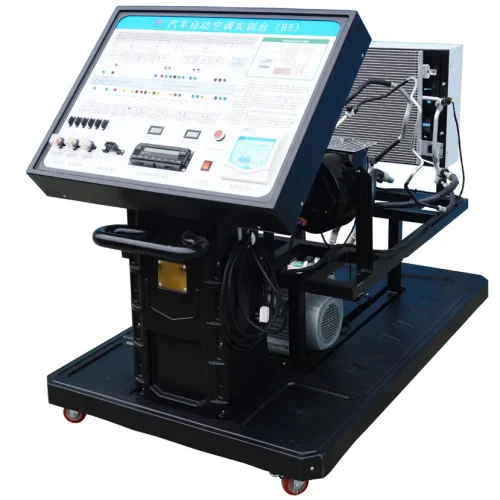
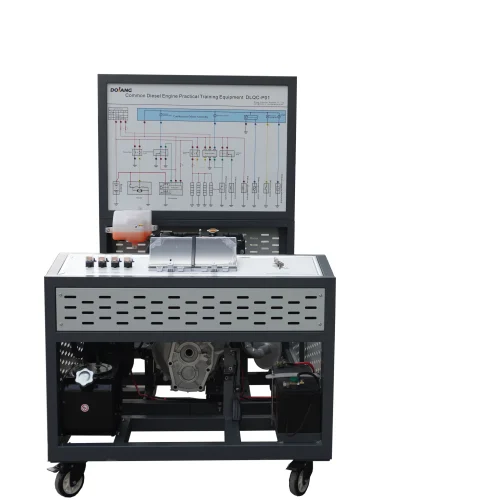
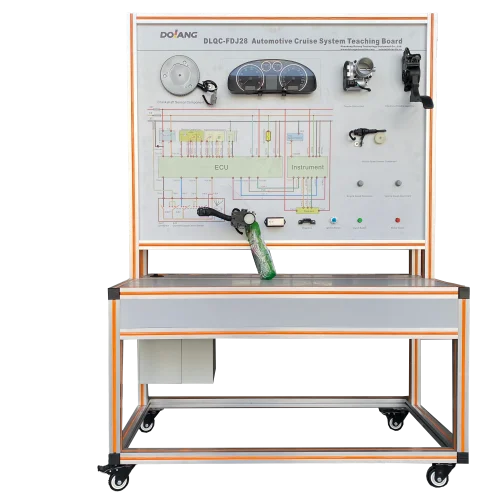
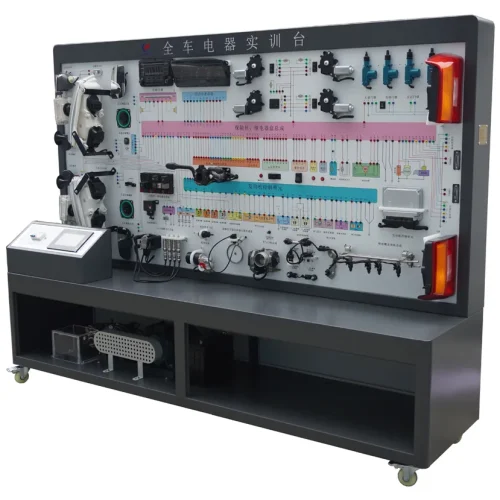
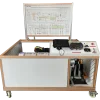
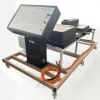
1. Using an actual automobile automatic air conditioning system as a foundation, this training platform fully demonstrates the structure and operating process of an automobile automatic air conditioning system. It is suitable for teaching the theory and maintenance of automobile automatic air conditioning systems in secondary and higher vocational and technical schools, general education colleges, and training institutions.
II. Equipment Components
1. The training platform includes the following main components: ① Air conditioning compressor assembly (1); ② Mobile stand (1); ③ AC motor (1); ④ Evaporator assembly (1); ⑤ Refrigerator assembly (1); ⑥ Air conditioning system control assembly (1); ⑦ Expansion valve assembly (1); ⑧ Dryer assembly (1); ⑨ Blower assembly (1); ⑩ Water tank heating controller (1).
III. Functional Description
1. A fully functional automotive automatic air conditioning system, assembled using genuine vehicle parts and arranged according to the original vehicle piping, fully demonstrates the structure and operation of the automotive automatic air conditioning system.
2. A drive motor serves as the power source, driving the air conditioning compressor. The air conditioning control panel operates the blower, compressor pump, condenser fan, adjusts the airflow temperature, and adjusts the airflow direction, fully demonstrating the operation of the air conditioning system.
3. This lab bench allows you to visually monitor the voltage changes of various sensors, such as the indoor temperature sensor and ambient temperature sensor, as they change with load. You can also view actual data on the high and low pressures of the air conditioning refrigerant, observe the structure of the evaporator assembly, the high-pressure and low-pressure switches, the air conditioning switch, and other components for easy observation and measurement.
4. A thermometer is installed on the training bench panel, displaying real-time temperature changes at the inlet and outlet of the air conditioning pipes.
5. The training bench allows students to conduct vacuum tests. Practical work includes vacuuming, refrigerant filling, and leak detection.
6. The system can operate the original vehicle’s air conditioning system functions, including cooling, heating, internal and external circulation, air outlet adjustment, and defrost modes.
7. The equipment panel is constructed of high-grade aluminum-plastic composite panels that are resistant to impact, staining, fire, and moisture, and the surface is spray-primed using a special process. The panel features a permanent color circuit diagram, allowing participants to visually compare the circuit diagram with the actual equipment to understand and analyze the operating principles of various automotive automatic air conditioning systems.
8. The training platform panel is equipped with test terminals for directly detecting electrical signals from various circuit components in the automotive automatic air conditioning system, such as resistance, voltage, current, and frequency.
9. The wiring harness terminals are neatly arranged and concealed, and the wiring harness is securely secured on the back of the panel and inside the platform.
10. The training platform is constructed of high-strength European-standard aluminum profiles and decorated with anti-collision rubber strips, making it durable and attractive. It is equipped with four swivel casters with self-locking mechanisms for secure positioning. 11. To facilitate teaching, the training platform is equipped with an intelligent touchscreen fault setting and assessment system. Real vehicle faults, such as those associated with the air conditioning control module, are set up. The instructor sets the fault, and the trainee analyzes and locates the fault point, simultaneously mastering real-vehicle troubleshooting skills.
11.1. The system’s 4.3-inch LCD touchscreen display connects to the lower-level driver board using bus communication technology, employing a two-wire response mode protocol with a maximum communication distance of up to one kilometer. The display panel features power, operating status, and communication status indicators, providing a visual overview of the system’s current operating status.
11.2. The system utilizes a 32-bit AMR9 processor, consuming less than 2W. It complies with EN61000-6-2:2005 and EN61000-6-4:2007 standards, including lightning surge ratings of ±4kV, group pulse ratings of ±4kV, electrostatic contact ratings of 4kV, and air discharge ratings of 8kV. 11.3. The system includes four functional modules: “Training Mode,” “Manual Assessment,” “Automatic Assessment,” and “Challenge Mode.”
11.4. Functional Module Description: ①. Training Mode: Students can directly access the fault training interface, manually set different fault points, and then troubleshoot. A one-touch reset button can also be used to clear all faults with one click. ②. Manual Assessment: The teacher enters the settings interface with a password, sets the assessment time, and freely selects the fault points to be assessed. Students then begin answering questions, with a countdown display. After the assessment is complete, the system will intelligently score the students, and the screen will display the assessment results. Exclamation marks represent the set fault points, with correct answers marked with a check mark and incorrect answers marked with a cross. These icons can be clicked for detailed explanation. ③. Automatic Assessment: The teacher enters the settings interface with a password, sets the assessment time, and the system automatically sets the number of fault points based on the internal question bank. Students then begin answering questions, which will be intelligently scored, and the screen will display the assessment results. The error points are designated as exclamation marks, correct answers are marked with a check mark, and incorrect answers are marked with a cross. You can also click on these icons for more detailed explanations. ④. Challenge Mode: Students can enter the settings interface to select the difficulty level and challenge time. Once set, the system will automatically and randomly assign error points based on the difficulty level. Students can then practice the challenge and receive intelligent scoring after completing the test.
IV. Technical Features
1. Stand Dimensions: ≥ 1600 mm (L) × 1000 mm (W) × 1350 mm (H)
2. Frame Material: European standard industrial silver aluminum profile / matte anodized
3. Main Panel Material: Aluminum-plastic composite panel (weather-resistant, wear-resistant, high-temperature resistant, high-strength, and corrosion-resistant)
4. System Circuit Diagram Printing Method: UV Printing (The system circuit diagram is drawn and assembled in accordance with the original manufacturer’s repair manual).
5. Side Panel Material: Aluminum-plastic composite panel (weather-resistant, corrosion-resistant, high-strength, and high-temperature resistant)
6. Test Ports: High-quality nylon material, high-pressure safety 4mm panel banana socket / PA66 high-strength nylon / brass nickel-plated / RoHS-compliant electroplating
7. Load-bearing Wheels: Made of a single-piece composite nylon material, they offer high load-bearing capacity and high wear resistance. The wide wheel tread provides exceptional stability, flexible rotation, and superior durability. The dual-bearing design ensures even load bearing and is pressure- and impact-resistant. 8. Power Supply: External Power Supply: AC 220V ±10%, 50Hz
Operating Voltage: DC 12V
Refrigerant: R134a
Operating Temperature: -40°C to +50°C
High-Pressure Gauge: 0 to 3.5MPa
Low-Pressure Gauge: 0 to 1.5MPa
Asynchronous Motor: Voltage: AC 220V
Power: 2.2kW
V. Practical Training
1. Training on the Structure and Operating Principles of Automatic Air Conditioning Systems;
2. Training on the Principles of Automatic Air Conditioning Systems;
3. Training on Reading Automatic Air Conditioning System Circuit Diagrams;
4. Learning and Mastering the Refrigerant Filling and Recovery Operations;
5. Training on Automatic Air Conditioning System Fault Diagnosis, Detection, and Troubleshooting;
6. Training on Basic Maintenance of Automatic Air Conditioning Systems;
7. Learning and Mastering the Leak Detection Operations of Air Conditioning Pipes;
8. Understanding and Analyzing the Location, Type, and Performance of Various Sensors and Actuators in the Air Conditioning System; 9. Learn to use automotive diagnostic equipment to read and analyze data streams and fault codes of air conditioning systems;