I. Overview
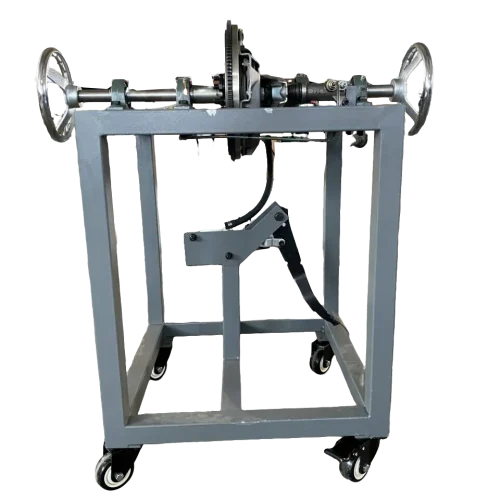
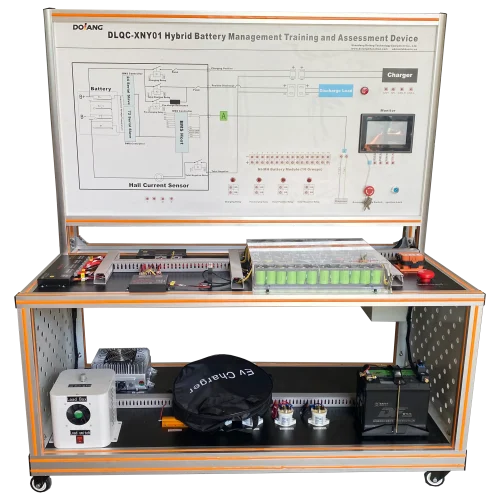
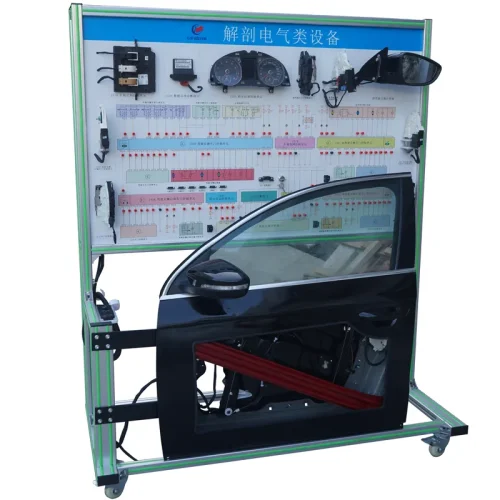
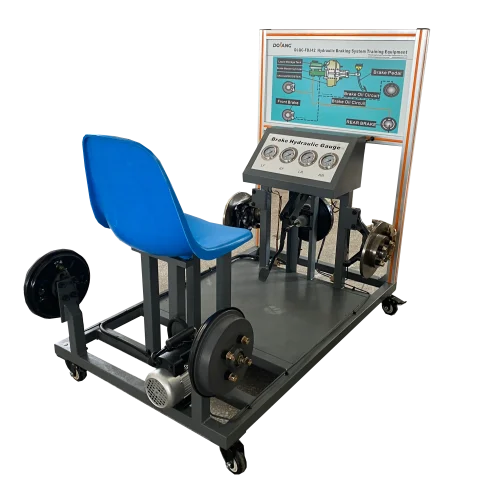
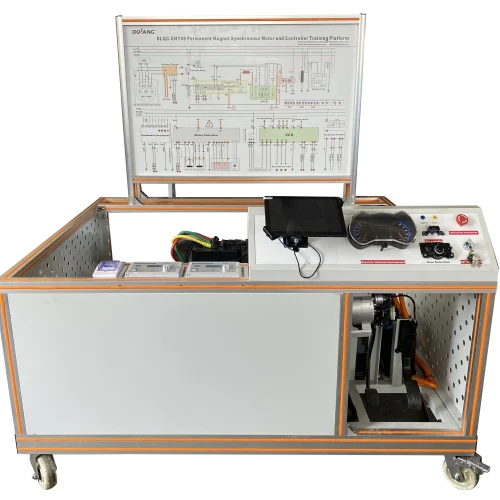
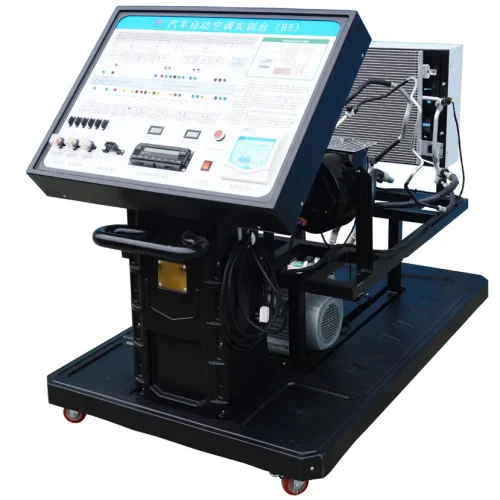
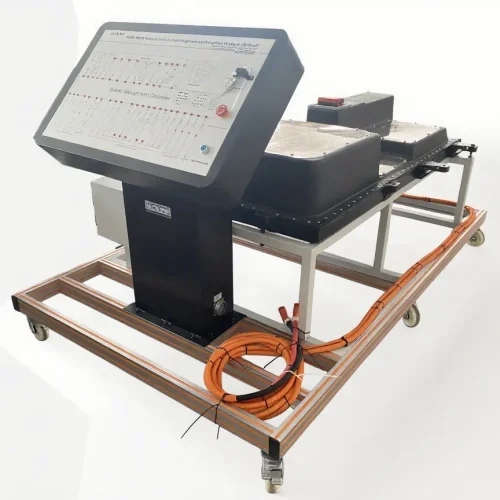
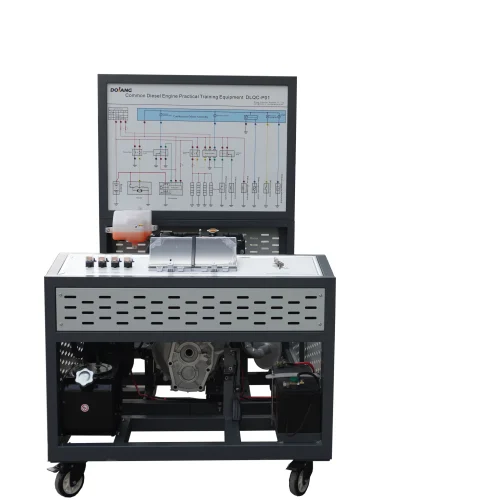
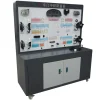
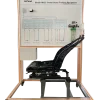
1. The demonstration board, based on a physical assembly of a Volkswagen airbag system, fully demonstrates the structure and operation of the vehicle airbag system. This demonstration enhances students’ initial understanding of the airbag system, providing a more intuitive and in-depth understanding of the system.
II. Equipment Components
1. The training platform includes the following key components: ① Hairspring assembly (1 set); ② Mobile stand (1); ③ Driver’s airbag initiator (1); ④ Passenger’s airbag initiator (1); ⑤ Airbag computer (1); ⑥ Cylinder (1); ⑦ Air tank (1); ⑧ Airbag assembly (1).
III. Functional Description
1. Operates the collision cylinder to simulate a car collision and rapid airbag inflation, realistically demonstrating the operation of the vehicle airbag system.
2. A realistic, operational vehicle airbag system fully demonstrates the structure and components of the vehicle airbag system.
3. The demonstration board panel is constructed of 4mm thick, corrosion-resistant, and impact-resistant plastic. The high-grade aluminum-plastic panel is resistant to pollution, fire, and moisture, and is primed using a special spray-coat process. The panel features a permanent color circuit diagram, allowing students to visually compare the circuit diagram with the actual device to understand and analyze the operating principles of the vehicle airbag system.
4. The teaching board panel is equipped with test terminals for directly detecting electrical signals from various circuit components in the vehicle airbag system, such as resistance, voltage, current, and frequency.
5. The teaching board panel features a diagnostic socket that connects to a dedicated or universal vehicle decoder for self-diagnosis of the airbag control unit, including reading and clearing fault codes.
6. The training platform is constructed of European-standard aluminum profiles and is The display features decorative trim, a beautiful appearance, and a sturdy build. It also features self-locking casters for flexible mobility, safety, reliability, and durability.
7. The wiring harness terminals are neatly arranged and concealed, and the wiring harness is securely secured on the back of the panel and inside the stand.
8. The teaching board operates on a standard 220V AC power supply, which is converted to 12V DC via internal circuitry. No batteries are required, reducing the need for charging. The 12V DC power supply is short-circuit proof.
IV. Technical Features
1. Stand Dimensions: ≥ 1200mm (L) × 600mm (W) × 1700mm (H)
2. Frame Material: Sheet metal with electrostatic spraying
3. Main Panel Material: Aluminum-plastic panel for weather resistance, wear resistance, high temperature resistance, high strength, and corrosion resistance.
4. System Circuit Diagram Printing Method: UV Printing (The system circuit diagram is drawn and assembled in accordance with the original factory maintenance manual).
5. Side Panel Material: Aluminum-Plastic Composite Panel (Weather-Resistant, Corrosion-Resistant, High-Strength, and High-Temperature).
6. Test Ports: High-Quality Nylon, High-Pressure Safety, 4mm Panel Banana Jack/PA66 High-Strength Nylon/Brass Nickel-Plated/RoHS-Compliant Electroplating.
7. Load-Bearing Wheels: Made of a single-piece composite nylon material, they offer high load-bearing capacity and excellent wear resistance. The wide wheel tread provides exceptional stability, flexible rotation, and superior durability. The dual-bearing design ensures even load-bearing and is pressure- and impact-resistant.
8. External Power Supply: AC 220V 50Hz. V. Practical Training Projects
1. Master the cognitive teaching of automobile airbag configuration and components;
2. Understand the teaching of automobile airbag control principles;
3. Master the basic knowledge and operating principles of automobile airbags;
4. Be able to independently list and explain automobile airbag components;
5. Understand the operating conditions of automobile airbags;
6. Be able to independently troubleshoot, maintain, and repair automobile airbags;
7. Be able to measure the resistance of the airbag and auxiliary safety control module connector terminals;
8. Be able to read and clear airbag and auxiliary safety control module related fault codes.