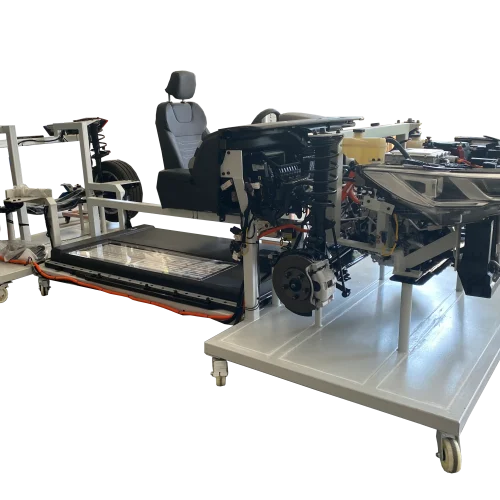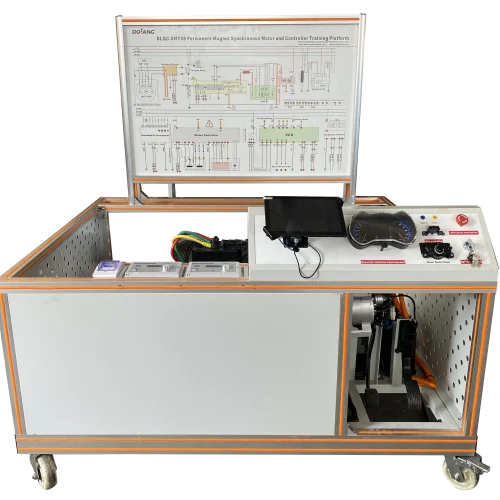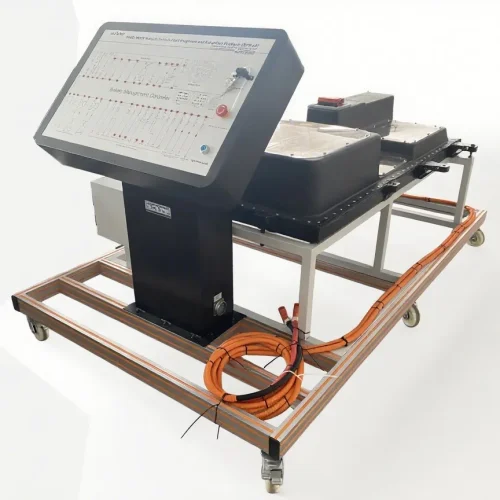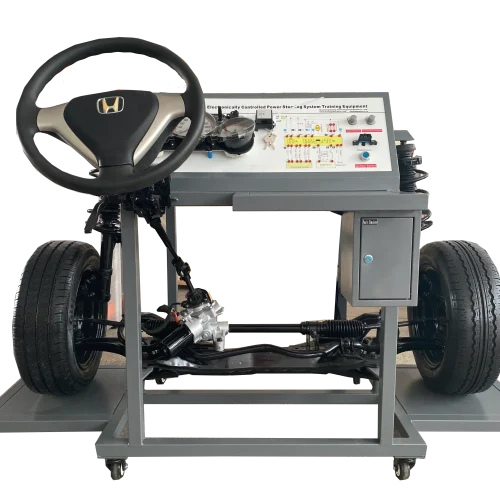
I. Product Introduction
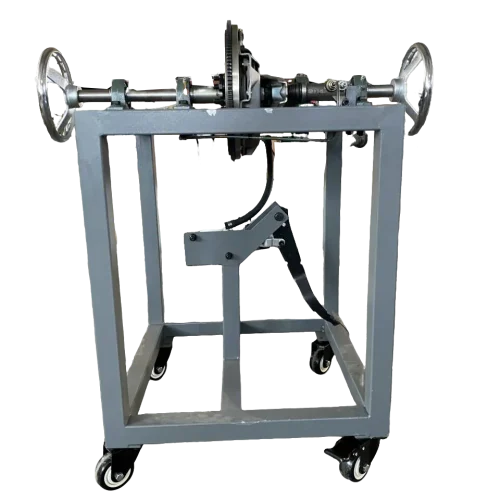
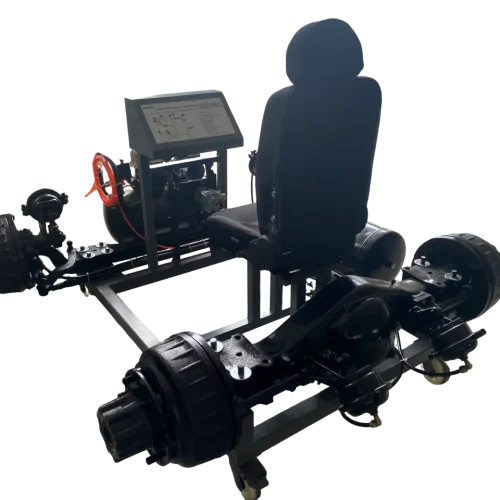
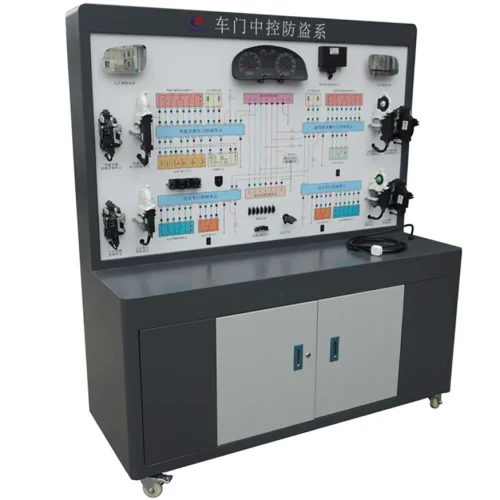
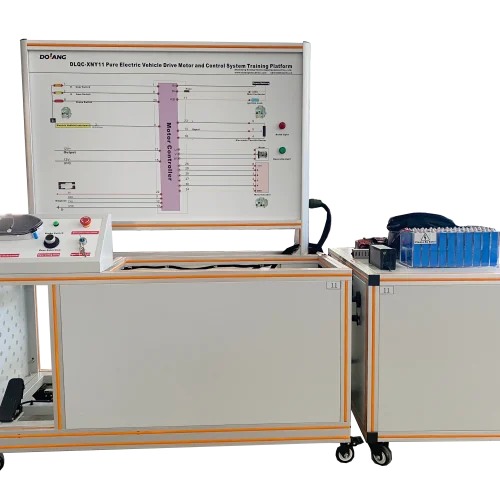
1. This product is designed for use with complete vehicle training vehicles used in new energy practical training. It is developed based on the latest factory circuitry. Once the test box seamlessly connects to the vehicle, it can connect to the vehicle’s battery management system, motor controller, AC charging unit, keyless entry system, body control system, body electrical system, gateway, and door computer, enabling genuine vehicle testing and repair. The test box facilitates fault diagnosis by teachers and real-time signal measurement by students. It can be customized based on specific teaching needs. The test box has over 200 fault points and can be configured for open circuit, short circuit, and loose connection faults. Compound faults can be combined to meet diverse teaching requirements, maximizing support for the integrated learning model. It also plays a significant role in curriculum reform and innovation, further enhancing students’ professional skills, promoting employment opportunities for graduates of relevant vocational colleges, and cultivating practical and in-demand talent for industry and businesses.
II. Product Features
1. The complete vehicle fault configuration platform and fault detection box are designed for the complete vehicle. They can be easily connected in series between the control module and the original vehicle wiring harness without disrupting the original vehicle circuitry. All vehicle control systems, sensors, and actuators are fully functional and functioning normally.
2. The vehicle fault setting platform and fault detection box are multifunctional, serving as both a fault setting terminal for instructors and a signal measurement terminal for students. They support signal measurement and fault setting for the vehicle’s battery management system, motor controller, AC charging unit, keyless entry system, body control system, body electrical system, gateway, and door computer.
3. The detection box connects to the wiring harness connector that matches the original vehicle plug, enabling full-vehicle teaching and practical training assessments.
4. The back of the detection box houses the mechanical fault setting terminal, featuring a hidden mechanical fault setting system. U-shaped connectors allow for setting faults for open circuit, short circuit, sporadic fault, poor contact, and CAN line reverse connection. This effectively simulates various system fault phenomena, improving students’ fault diagnosis skills and effectively protecting equipment efficiency.
5. The front of the detection box houses the student measurement terminal, allowing users to directly use a multimeter or oscilloscope to measure voltage, current, resistance, frequency, waveform, and other signals in real time on the panel. 6. The test box’s single pin features a dual-point measurement design, effectively helping students determine whether faults are at the component or control unit level during troubleshooting.
7. The test box utilizes an aviation plug design for quick, non-destructive connection to the vehicle. By replacing the matching wiring harness and test panel, fault setting, testing, and troubleshooting can be performed for different vehicle components and modules. This eliminates line loss caused by repeated measurements, and the test terminals are fully compatible with the relevant test instruments and junction box terminals.
8. The test box utilizes a 4mm-thick, corrosion-resistant, impact-resistant, stain-resistant, fire-resistant, and moisture-resistant aluminum-plastic composite panel as its base. A colored acrylic panel with printed pins for different control unit terminals is mounted on top, facilitating comparative measurements and module replacement.
9. The test box frame is constructed from a 40mm x 40mm, integrated aluminum alloy profile that is oil-resistant, corrosion-resistant, and easy to clean.